
Home > News > Company News
TASHKENT, Uzbekistan — JOZOKING (Tianjin) Technology Co., Ltd. marked its first-ever participation in a Central Asian trade exhibition this month, drawing strong attention from buyers seeking solar energy storage solutions and underscoring the company’s growing footprint in the global new-energy supply chain.
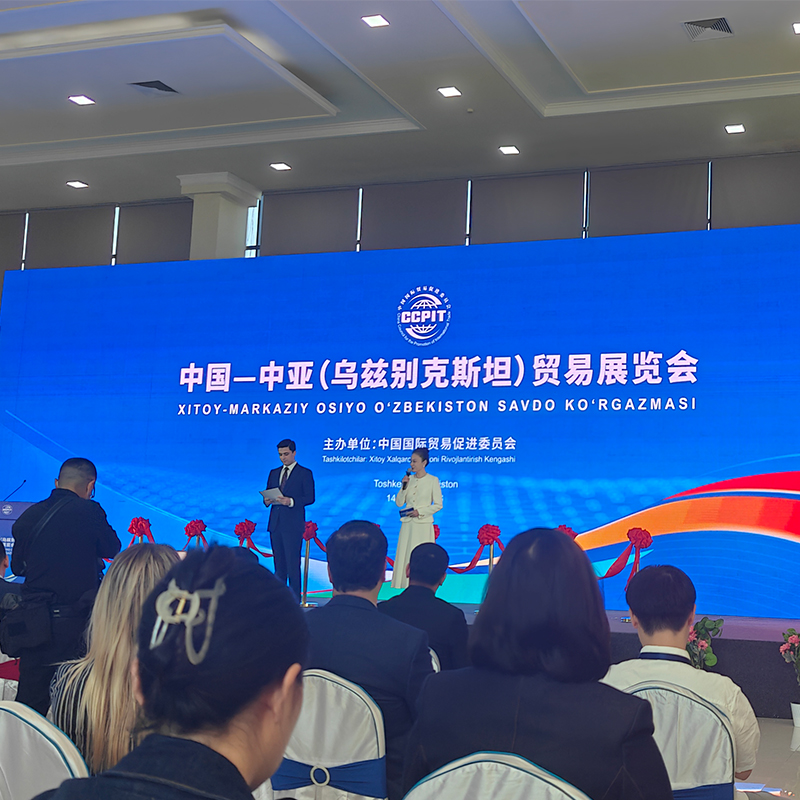
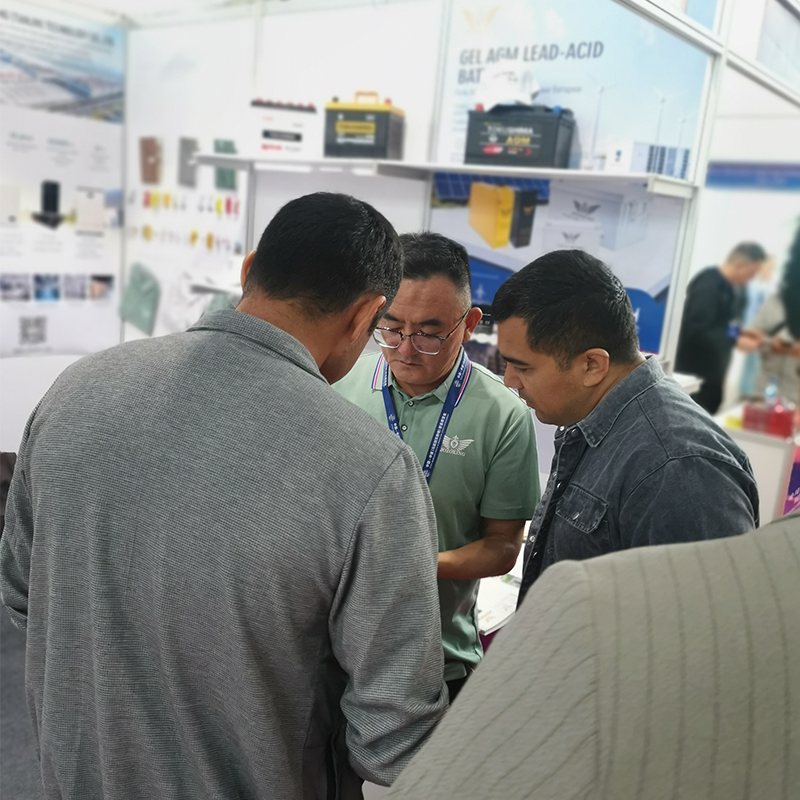
The company exhibited at the China–Central Asia (Uzbekistan) Trade Exhibition, held from October 14 to 16 in Tashkent, an event hosted by the China Council for the Promotion of International Trade (CCPIT) and focused on deepening regional trade cooperation in green energy, smart manufacturing, and consumer electronics. Over the three-day run, JOZOKING’s booth fielded a steady stream of inquiries from distributors, installers, and project developers interested in its solar storage batteries and energy storage systems.
“The level of interest exceeded our expectations,” said a company representative at the show. “Visitors were not only asking about product specifications—they wanted to understand how our GEL and lithium storage solutions can support off-grid and hybrid solar projects in a region where energy demand is rising fast.”
JOZOKING’s showing in Tashkent reflects a broader corporate capacity that has matured well beyond its origins. As a high-tech enterprise integrating R&D, manufacturing, and sales, JOZOKING (Tianjin) Technology operates a 135,000-square-meter production base, employs more than 286 specialists, and serves customers in over 100 countries and regions. Its product portfolio spans maintenance-free GEL batteries, AGM batteries, and lithium-ion (NCM and LFP) storage systems, tailored for applications ranging from small-scale residential solar to commercial and industrial storage facilities. The company’s batteries hold CE, UL, GCC, and NOM certifications, a compliance record that has supported its expansion into European, North American, and Australian markets.
At the Tashkent exhibition, the inquiries clustered around two product families: deep-cycle GEL batteries for daily solar cycling and lithium storage systems for higher-energy-density installations. JOZOKING’s GEL technology uses a silicon-based electrolyte that minimizes acid stratification and supports hundreds of deep discharge cycles, making it well suited to off-grid and unstable-grid environments common in Central Asia.
The strong reception in Tashkent aligns with a global solar market that, despite short-term fluctuations, is firmly on an upward trajectory. According to SolarPower Europe’s Medium Scenario, global new solar PV installations reached approximately 597 GW in 2024, are projected at 655 GW in 2025, 665 GW in 2026, and 755 GW in 2027. BloombergNEF offers a similar long-term view, forecasting 700 GW in 2025, 753 GW in 2026, and 780 GW in 2027. While the two outlooks differ on near-term pacing—SolarPower Europe anticipates a temporary dip in 2026 tied to policy transitions in China—both point to a market that will add well over 2.8 TW of cumulative capacity between 2024 and 2027. For storage suppliers like JOZOKING, every gigawatt of solar added creates parallel demand for battery capacity.
The timing of JOZOKING’s Central Asian debut is particularly relevant to Uzbekistan’s energy transition. The country has set a target of 25 GW of renewable capacity by 2030, with renewables expected to account for 54% of total electricity generation—up from an earlier 40% goal. Uzbekistan’s battery storage market is forecast to be the world’s fifth fastest-growing from 2024 to 2027, with capacity expanding from 0.6 GWh to 5.9 GWh over the three-year period. The government’s storage target alone reaches 4.2 GW by 2030, creating a pipeline that extends beyond utility-scale projects into the distributed and commercial segments where JOZOKING’s products are positioned.
For JOZOKING, the Tashkent exhibition was less a first step than a confirmation: the company’s manufacturing depth, certification portfolio, and product breadth are already matched to the needs of a region entering a steep storage build-out. “We came to listen, and what we heard was demand for reliable, affordable storage that can work with solar today—not in some distant future,” the representative added. “That is exactly what we build in Tianjin.”

Jozoking,Top global battery manufacturer. We provide you with automotive battery,lead acid battery deep cycle gel Agm battery, Lifepo4 and lithium battery.


Floor 3 Xuefu Building Xuefu Industrial Zone Jing Wu Town XiQing District TianJin China
Copyright © Jozoking (Tianjin) Technology Co, Ltd. All Rights Reserved | Privacy Policy | Blog


 EN
 AR
 BG
 HR
 CS
 DA
 NL
 FI
 FR
 DE
 EL
 IT
 JA
 KO
 NO
 PL
 PT
 RO
 RU
 ES
 SV
 TL
 ID
 SR
 SL
 VI
 SQ
 HU
 TH
 TR
 MS
 GA
 MK
 HY
 AZ
 BN
 MN
 MY
 KK
 UZ
 JOZO GROUP
