


 EN
EN
 AR
AR
 BG
BG
 HR
HR
 CS
CS
 DA
DA
 NL
NL
 FI
FI
 FR
FR
 DE
DE
 EL
EL
 IT
IT
 JA
JA
 KO
KO
 NO
NO
 PL
PL
 PT
PT
 RO
RO
 RU
RU
 ES
ES
 SV
SV
 TL
TL
 ID
ID
 SR
SR
 SL
SL
 VI
VI
 SQ
SQ
 HU
HU
 TH
TH
 TR
TR
 MS
MS
 GA
GA
 MK
MK
 HY
HY
 AZ
AZ
 BN
BN
 MN
MN
 MY
MY
 KK
KK
 UZ
UZ
 JOZO GROUP
 JOZO GROUP
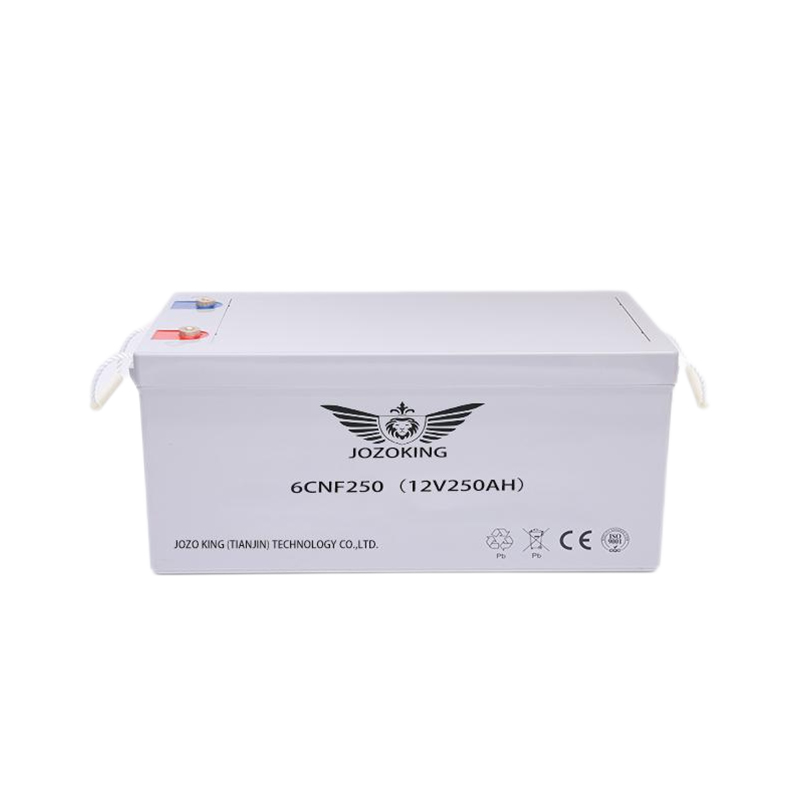
Sealed lead acid energy storage, a revolution of gel battery. Perhaps you don’t even know the technology behind a sealed lead acid energy storage or perhaps you think it’s same as an AGM battery, gel cell is a breakthrough in lead acid cell technology. At JOZOKING (TIANJIN) TECHNOLOGY CO., LTD. we provide high quality sealed lead acid battery maintenance free for solar power system storage, communication, back up system and many other industrial applications. How does it distinguish from other kinds of lead acid cell? Because of its main character, Gel electrolyte. Here comes a detail study of the principle of the Gel Battery technology, its properties and the reasons why people prefer in the whole world like Europe, North America and Australia.
The Chemistry of Immobilization: From Liquid to Gel
To properly learn what gel battery operation involves we need to first understand what it doesn't and why we had to make a gel battery in the first place from our normal 12v lead acid battery. A standard "flooded" lead-acid cell uses a liquid electrolyte solution which is basically made of sulfuric acid and water. Because it's a liquid, it can spill, evaporate and can settle out in layers, with the acid sinking to the bottom of the cell over a period of time.
The gel battery gets rid of this issue by converting the electrolyte into a semi-solid state. To be precise, a certain amount of sulfuric acid is introduced to an even finer dispersion of fumed silica particles (silicon dioxide). It chemically produces a thixotropic gel, which, when in a rest state, cannot be displaced, yet changes viscosity when disturbed so the ions can be shuttled across the acid when charging and discharging, in effect, it gives you electrolyte with the viscosity of a rich jelly that holds acid captive for the long run.
This immobilization of the electrolyte within the gel is the very hallmark of the gel battery, and the reason it has many of its desirable characteristics. Not only does it provide for spill-free installation in any attitude of the battery, the gel matrix structure provides an ideal internal scaffolding which facilitates a very important internal mechanism, that of gas recombination. And this is the reason they call a gel battery, the lead acid battery maintenance free.
The Gas Recombination Cycle: The Secret to Maintenance-Free Operation
A fascinating feature of the gel battery is the capacity to recombine charging gases into water, so no topping up of electrolyte is required. The gases formed during charging are recycled by recombination, a feature which categorizes gel batteries as VRLA (Valve-Regulated Lead-Acid) type batteries.
Here's the recombination process. The positive plate creates oxygen when charging, especially toward the end of the cycle. In a flooded battery, the oxygen simply becomes a gas that would bubble off through the cell and carry some water with it, meaning the cell would need to be topped up. In a gel battery the recombination gel structure means this oxygen travels through minuscule shrinkage cracks in the gel and makes its way to the negative plate. Here it finds a high-surface area, spongy-type lead structure and adheres. This oxygen then combines with the hydrogen that's been previously desorbed and retained on the surface of the negative plate to produce more water.
Our battery is so efficient with internal recombination that one way pressure relief vents are set low at about 2psi, only to vent excess pressure in the event of fault. During normal operation, battery will be fully sealed and recycle internal gases and no need to refill distilled water and no acidic fumes will come out. The “maintenance free” aspect for the JOZOKING battery technology is the basis of our gel battery development that leads to the GFM series that are well suited for use in remote locations or other hard to get at applications.
Superior Deep Cycle Performance
Gel batteries have become a popular choice for renewable energy and backup power systems due to their exceptional ability to withstand repeated deep-discharge cycles over long-term operation. The special gel-based electrolyte inside the battery maintains the relative structural stability of electrode plates even when deep discharge occurs under regular working conditions. This characteristic effectively minimizes the shedding of active material from plate surfaces during cyclic operation and reliably suppresses electrolyte stratification inside the battery casing. Thanks to this unique internal structure, gel batteries can sustain stable electrochemical performance throughout their whole lifecycle and avoid many common failure risks found in traditional battery designs. Consequently, high-quality gel batteries deliver an extended service life with consistent performance output, making them ideally suited for continuous daily charge-discharge cycling scenarios widely adopted in off-grid and grid-tied solar energy systems.
Precision Charging Requirements
This high performance does, however, have its downsides. Gel batteries are extremely intolerant of overcharging and their voltage needs to be tightly regulated. The electrolyte is more viscous, meaning ions move slower and, as a consequence, the gel has higher internal resistance than an AGM. This means that they don’t take a charge as quickly and need a slow, steady recharge.
Gel batteries do not like to be overcharged. Over voltage will create internal cracks and holes in the gel that are irreversible and will degrade the overall lifespan and capacity of the battery. This is why gels need their own charging profile with tight voltage requirements. These often are Lower bulk voltage (14.0–14.2V for a 12V system) compared to AGMs or floods. Because of their delicate nature, we recommend matching gel batteries with the proper gel charging setting to avoid damaging the battery life. At JOZOKING, our battery management and system design consulting will make sure you use the appropriate hardware to ensure your batteries will give you a long life.
Solar and Renewable Energy Storage
Batteries are frequently subject to high daily rates of charge and discharge in hybrid and off-grid solar applications, and for this reason, a gel battery's deep cycle capacity and ability to recover from a high level of depth-of-discharge ensures long-term reliability. Resistance to the heat that leads to evaporation makes them an ideal option for applications in warmer climates, and in JOZOKING’s battery technology specifically adapted for this market, their innovative gel is designed to improve resistance to high temperatures, strengthen the gels and improve oxygen mobility.
Summary: The Science of Reliability
This gel battery illustrates how intelligent chemical engineering principles can overcome the primary challenges faced by conventional lead acid cell technologies. Immobilizing the liquid electrolyte into a gel by adding silica and allowing for internal gas recombination has resulted in a rechargeable, maintenance-free, spill-proof sealed lead acid battery that has outstanding long life in deep cycle service. This has been the foundation upon which JOZOKING’s innovative lead acid battery maintenance free gel power products for the renewable energy sector are based, this incorporates our research in gel strengthening and electrodes, all providing reliable, cost effective and secure solutions for any of your renewable energy storage system and power backup requirements.


