Home > News > Company News
A global survey of agricultural machinery operators points to a structural battery failure problem—one that a conventional starting battery was never designed to survive.
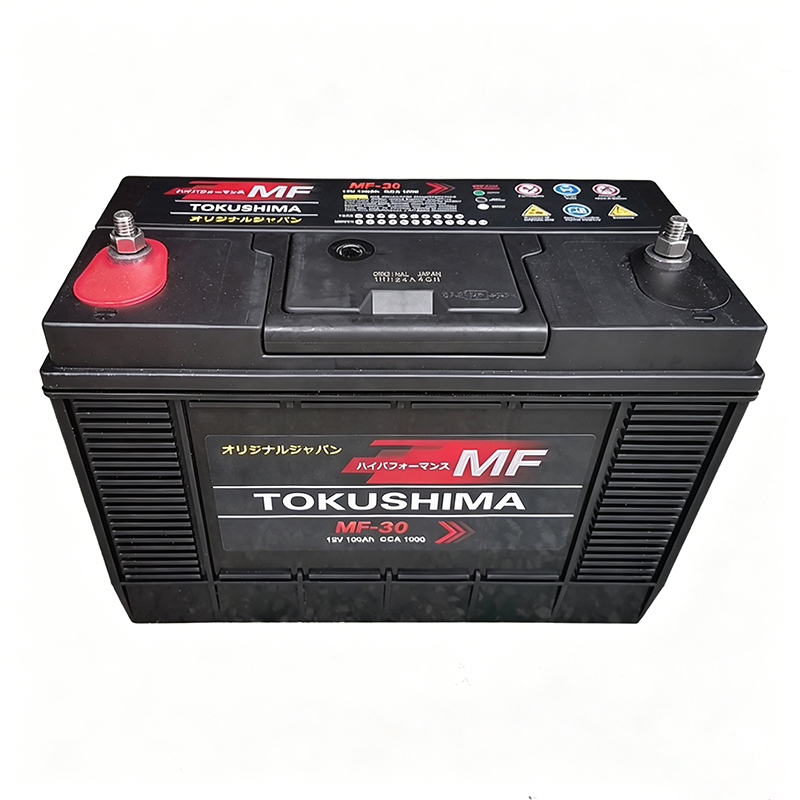
JOZOKING today announced the launch of the MF31 Maintenance-Free Battery (Group 31 / 12V 100Ah), a starting battery developed specifically for large agricultural machinery that sits idle for weeks or months between planting and harvest windows.
The launch follows a company survey of farms and machinery operators across major agricultural markets, which confirmed a pattern familiar to equipment owners but rarely addressed by battery manufacturers: combines, tractors and other large implements are used intensively for a narrow slice of the calendar, then left parked for the remainder of the year.
Measured operating data makes the scale of the gap clear. A monitored New Holland T7.270 AutoCommand tractor spent 17% of its recorded operating duration at idle, with daily idling ranging from 10 to 100 minutes. In a German fleet study, tractors in the 150–210 kW class recorded 15% standing time off-field and 4% standing time on-field, on top of 74% of engine hours spent in travel and field work—meaning a substantial share of the annual engine hour count is not productive field time. The same study put average annual engine hours at 819 h for 70–140 kW tractors and 985 h for 150–210 kW tractors—figures that, spread across a full year, leave thousands of hours in which the machine is stationary and the battery is not being charged. Research across 13 machinery types found annual operating times ranging from 217 to 1,721 hours, with tractors, planters and harvesters clustered in the 255–669 hour range. Agricultural tractors can idle for 10% to 45% of their entire working time, according to engineering research.
In cold-climate countries, the window is compressed by biology and weather. Finland’s growing season lasts 160–190 days in the south and 110–150 days in the north, with the productive period running roughly from April–May to August–October. At 60°N the season is about 180 days; at 70°N it falls to around 120 days. In Norway, the growing season can be as short as 90–110 days. Outside that window, the tractor sits—often through months of sub-zero temperatures.
Warm climates extend the production window but do not eliminate battery-killing downtime. In tropical Asia, rice calendars still concentrate planting and harvest into defined windows—main-season rice planted June–July and harvested October–November, second-season rice planted March–May and harvested August–October—even where multiple crops are possible. In Brazil, sugarcane harvesting in the south-central region runs from April to December, and in the northeast from September to April; the season is long, but it is still a season, and the machines still sit between cuts. Across both climate zones, the common thread is not temperature but long intervals in which the starting battery receives no charge.
A lead-acid battery discharges itself even with no load connected. At room temperature, conventional flooded batteries lose roughly 3–5% of capacity per month, and maintenance-free calcium designs lose 1–2% per month—but the rate roughly doubles for every 10°C increase in temperature. In a hot machine shed or a tropical implement barn, a battery that loses 3% per month at 20°C can lose 6% at 30°C and more again at 40°C. Deep discharge drives soft lead sulfate into the plates; left for months, that sulfate hardens and becomes permanent, reducing capacity and cranking power even if the battery is later recharged. In cold climates, a discharged battery can freeze on an ordinary frosty night, cracking containers and buckling plates—a fully charged battery tolerates −50°C, while a flat one can fail at −8°C.
Operators who return to a flat battery often put it on a charger and expect it to recover. The chemistry, however, has already changed. A sulfated battery heats up internally during charging and releases gases; when those gases mix with oxygen, hydrogen is produced, which is highly flammable. All lead-acid batteries can emit explosive gases during charging, and in the worst case a sulfated battery can undergo thermal runaway, leading to fire or explosion. Recharging a sulfated battery at a high rate can itself cause an explosion. Repeated charge-recover cycles therefore do not restore the battery to its original condition—they shorten its service life while introducing a safety risk on a machine that may be parked inside a barn or near fuel storage.
The MF31 is JOZOKING’s answer to this specific failure mode. It is a Group 31, 12V 100Ah maintenance-free battery with up to 100 CCA of cold cranking current, engineered for the starting loads of large diesel agricultural equipment.
The construction targets the mechanisms that defeat conventional batteries in seasonal service. JOZOKING’s Japanese-patented lead alloy composition strengthens the paste-to-grid bond, keeping the active material anchored to the grid through long storage and vibration. Expanded metal (strip-cast) grid technology produces a denser, more corrosion-resistant grid structure, extending plate life under the deep-discharge and recharge conditions that seasonal equipment imposes. A reinforced, thicker casing improves resistance to shock and impact—relevant for batteries mounted on machinery that operates in fields and is then parked for months.
The result is a battery that can sit for several months and still deliver the cranking current required at the start of the next season—without the repeated charge-recovery cycle that degrades conventional batteries and introduces avoidable fire and explosion risk. For farms running multiple large machines across short, intense windows, the value proposition is not a longer warranty claim: it is a battery that is still a battery when the season returns.
About JOZOKING
JOZOKING develops and manufactures maintenance-free starting batteries for agricultural, industrial and commercial applications. The company’s MF31 / Group 31 platform is engineered for equipment that experiences extended idle periods between operating seasons.

Jozoking,Top global battery manufacturer. We provide you with automotive battery,lead acid battery deep cycle gel Agm battery, Lifepo4 and lithium battery.


Floor 3 Xuefu Building Xuefu Industrial Zone Jing Wu Town XiQing District TianJin China
Copyright © Jozoking (Tianjin) Technology Co, Ltd. All Rights Reserved | Privacy Policy | Blog


 EN
 AR
 BG
 HR
 CS
 DA
 NL
 FI
 FR
 DE
 EL
 IT
 JA
 KO
 NO
 PL
 PT
 RO
 RU
 ES
 SV
 TL
 ID
 SR
 SL
 VI
 SQ
 HU
 TH
 TR
 MS
 GA
 MK
 HY
 AZ
 BN
 MN
 MY
 KK
 UZ
 JOZO GROUP